When the Curve Goes Vertical
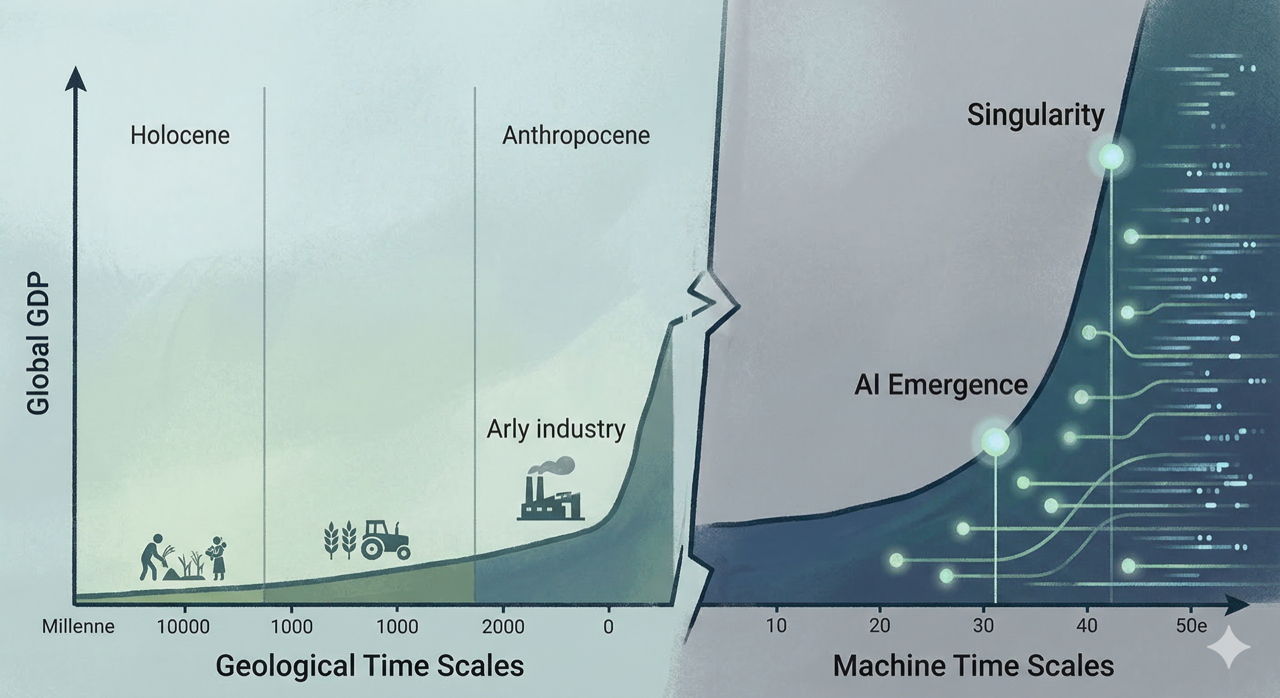
Look at a graph of world GDP over the last ten thousand years. Go ahead, I’ll wait. You know what you see? A flatline. A heartbeat monitor on a dead patient for about 9,900 years, then bam—vertical. The kind of curve that makes economists weep and technologists salivate. That spike? That’s us. That’s the industrial revolution, the information age, the digital explosion. But here’s the thing nobody wants to talk about: that curve has another jump in it. And this next one? It makes the industrial revolution look like a rounding error.
Nick Bostrom drops this bomb in the opening pages of Superintelligence: if machine intelligence reaches human level and then keeps improving, we’re not talking about another industrial revolution. We’re talking about a world economy that doubles in weeks. Not years. Not decades. Weeks. Think about that. Your salary becomes worthless between paychecks. Your savings evaporate before you can spend them. The entire concept of “economic planning” becomes a joke because by the time you’ve planned anything, the parameters have shifted by orders of magnitude.
The Moving Goalposts Problem
Here’s a fun fact that’ll make you question everything: AI researchers have been predicting human-level machine intelligence in twenty years since the 1940s. That’s not a typo. Every generation of researchers has looked at their current technology and thought, “Yeah, we’re almost there.” And every generation has been wrong. The goalposts keep moving, the finish line keeps receding, and we’re all just running on a treadmill toward a horizon that refuses to get any closer.
But here’s where it gets weird. In 2014, Bostrom surveyed actual experts in the field—people building these systems, not just talking about them—and asked when they expected human-level machine intelligence (HLMI). The median response? 2040. With a 10% chance by 2022 and a 90% chance by 2075. And for what it’s worth, 2022 came and went without our robot overlords, but we did get ChatGPT, which—let’s be honest—felt like the opening act of something much stranger.
“As soon as it works, no one calls it AI anymore.” — John McCarthy
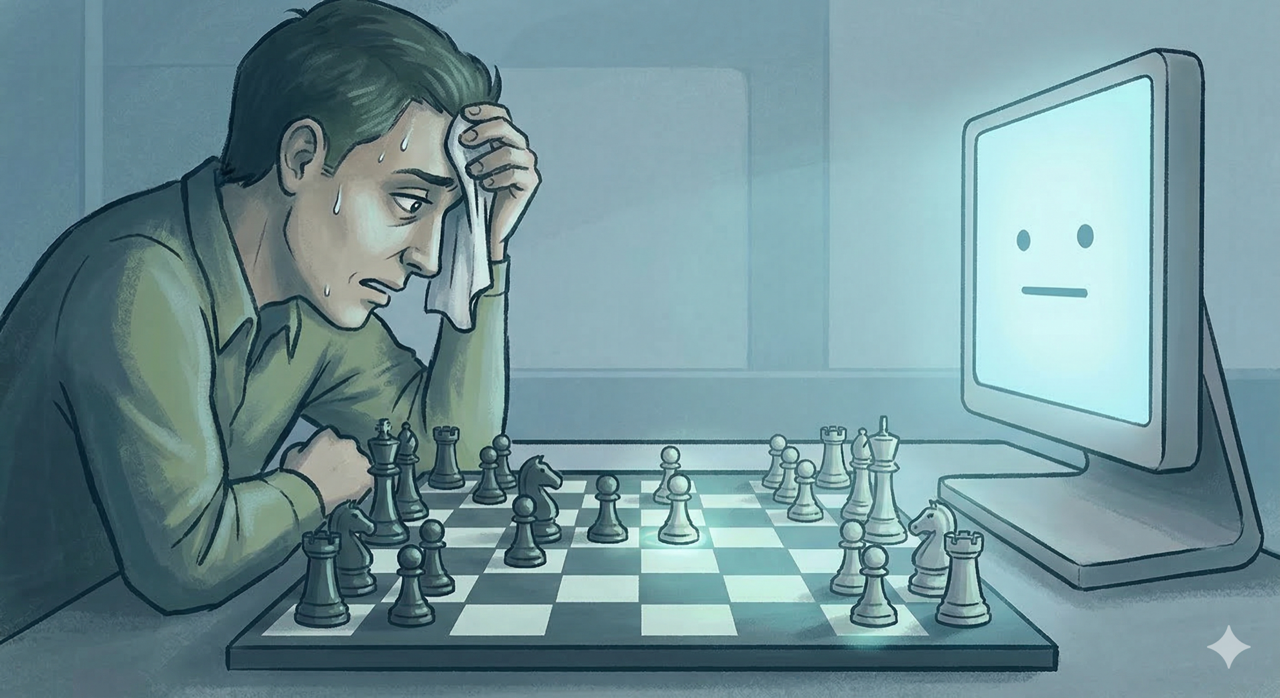
That quote from McCarthy, one of the founding fathers of AI, captures something essential about this field. We’ve been building “AI” for decades, and every time something works—chess, Jeopardy!, image recognition, protein folding—we rebrand it as “just software” and move the goalposts again. Deep Blue beats Kasparov? That’s not intelligence, that’s brute force search. Watson wins Jeopardy!? That’s not understanding, that’s statistical pattern matching. GPT-4 writes poetry and passes the bar exam? Well, surely that’s just… something else. Anything but admitting the machines are catching up.
| Game | AI Status | Milestone |
|---|---|---|
| Checkers | Perfect | Solved in 2002—AI always plays optimally |
| Chess | Superhuman | Deep Blue defeats Kasparov, 1997 |
| Go | Superhuman | AlphaGo defeats Lee Sedol, 2016 |
What’s Coming Next
This isn’t science fiction. This is the logical endpoint of a trend line that’s been running since we figured out how to make fire. The question isn’t whether this happens. The question is whether you’re ready for it. And spoiler alert: you’re not. Nobody is. But that’s what makes this the most interesting time to be alive—or the last interesting time, depending on how the dice roll.
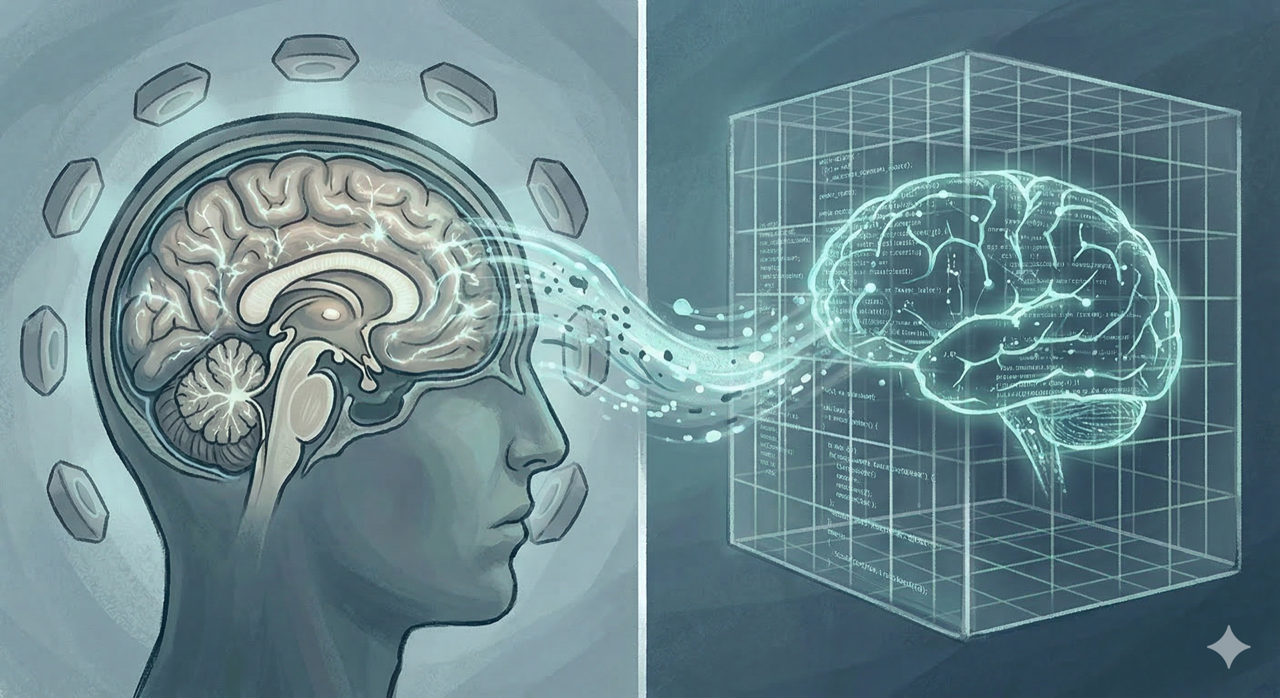
In the next part of this series, we’ll explore the three primary paths to superintelligence: artificial intelligence, whole brain emulation, and biological cognitive enhancement. Each road leads to the same destination, but the journey matters enormously for what kind of future we end up with.
Continue Reading: Part 2: Three Roads to the Same Destination