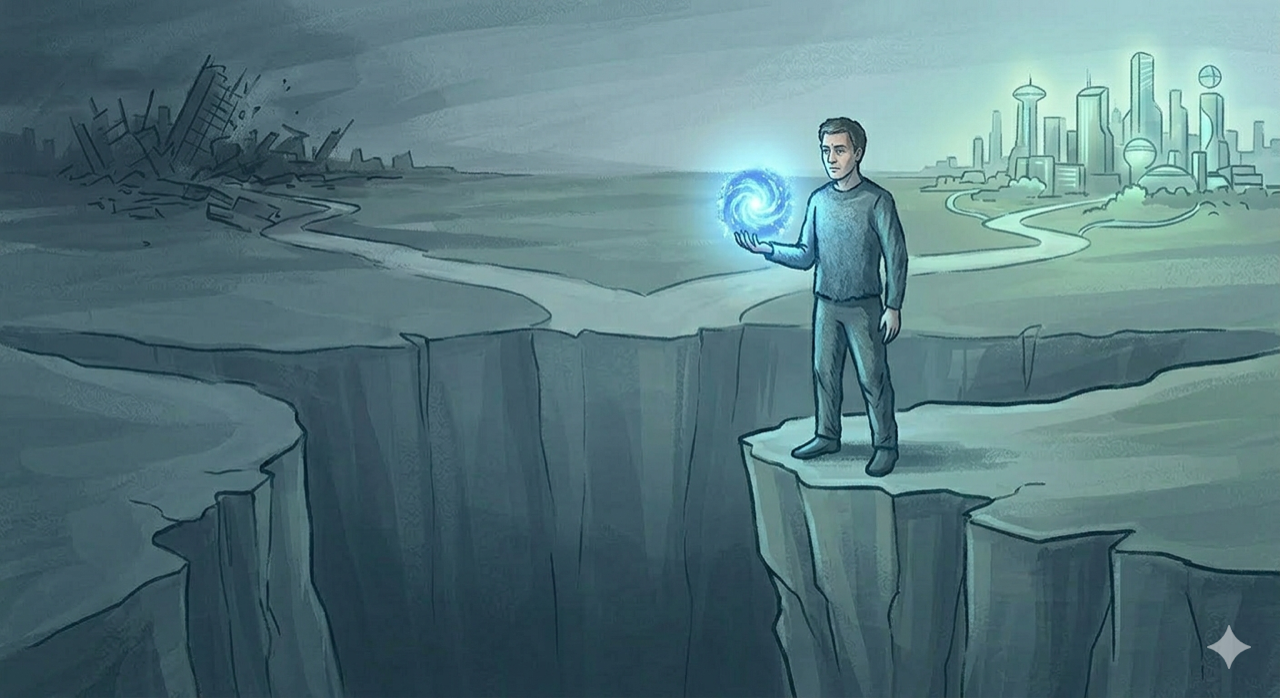
In Part 1, we established that superintelligence isn’t a question of “if” but “when.” Now let’s talk about the “how.” Nick Bostrom maps out three routes to superintelligence. Each has its own technical requirements, timelines, and problems.
Path One: Artificial Intelligence
The classic route. Build a machine that thinks.
The logic is simple: human brains are physical systems operating according to the laws of physics. There’s no magic involved. So cognition can work in other mediums—silicon, photonics, whatever. The medium doesn’t matter, only the computation.
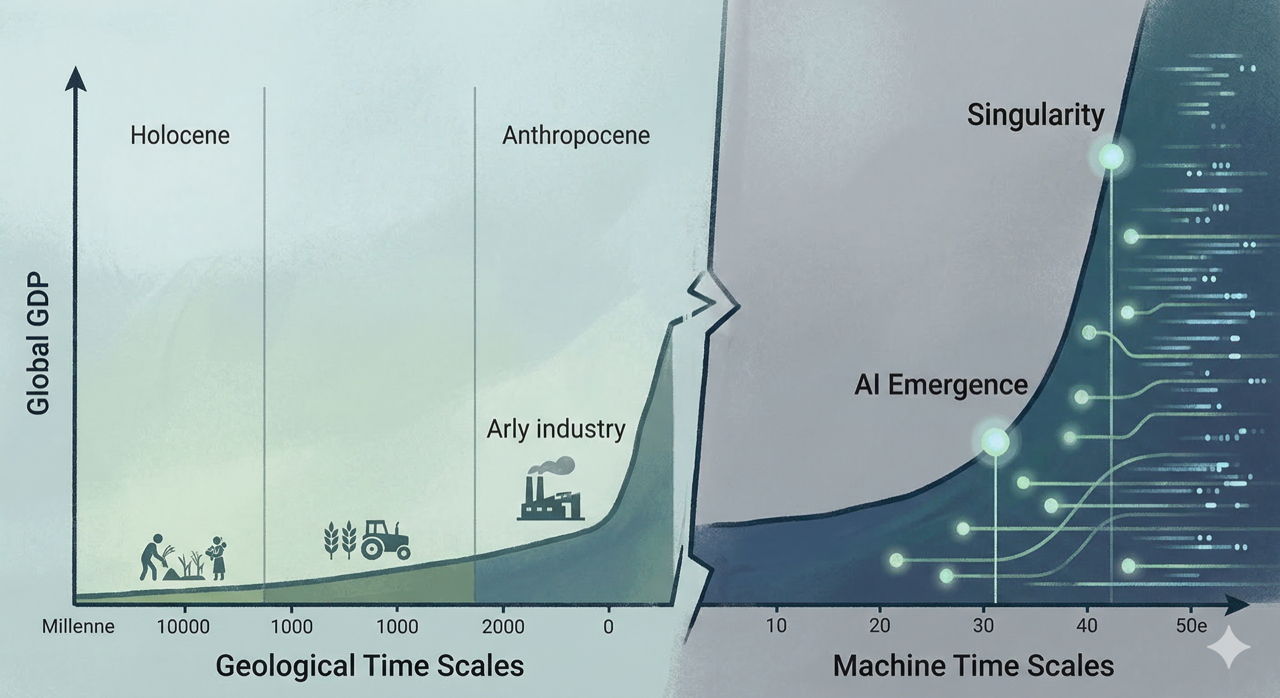
Moore’s Law is worth mentioning here, even though extrapolation is risky. Supercomputer performance has doubled roughly every 1.5 years for decades. We’re now in the exascale era—machines capable of 10^18 operations per second. That’s getting close to estimates for the human brain’s computational capacity.
But raw compute isn’t the bottleneck. The bottleneck is software—specifically, the algorithms that turn computation into intelligence. We still don’t know how to write code that generalizes, that understands context, that shows real common sense. Every time we think we’ve figured it out, we find a new edge case that breaks everything.
Path Two: Whole Brain Emulation
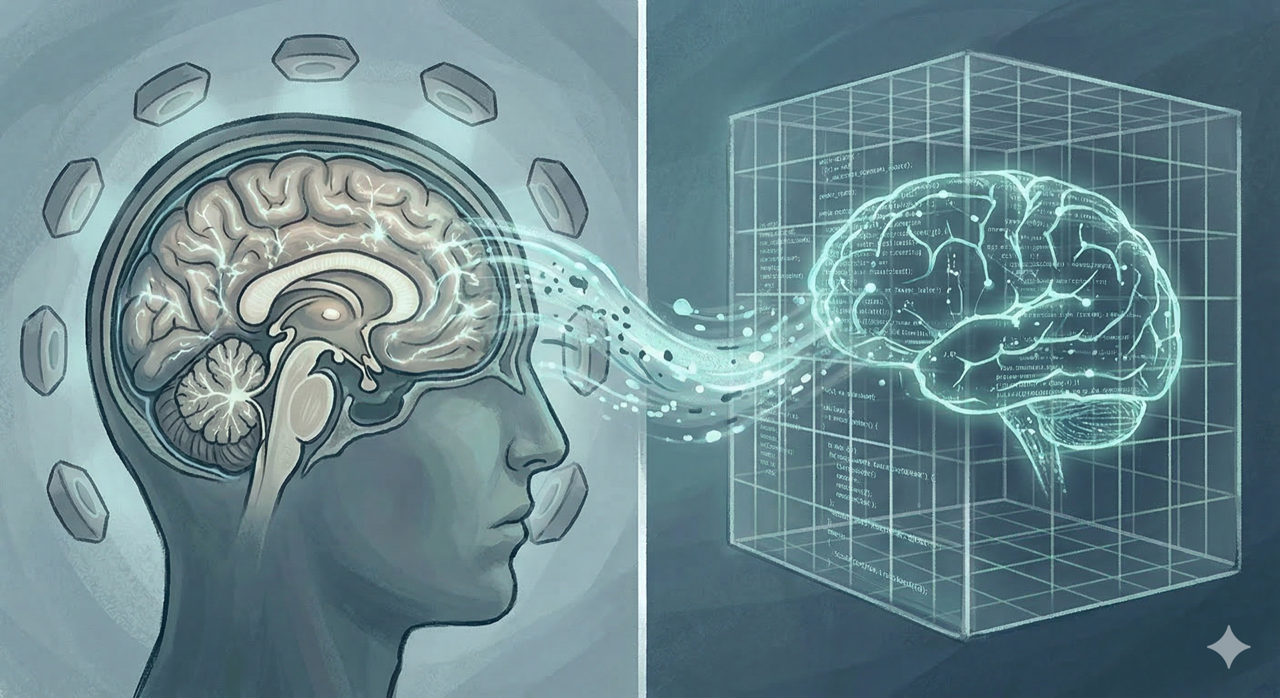
This is the copy-paste approach. Instead of figuring out how intelligence works from scratch, just scan a human brain at high resolution and simulate it in software. The thinking here is practical: evolution already solved the intelligence problem. We don’t need to understand how the brain works to copy it. We just need good scanning technology and enough computing power.
The technical roadmap looks like this: First, you need scanning technology that can capture the connectome—the brain’s full wiring diagram—at the level of individual synapses. Then you need simulation infrastructure: models of neurons, synapses, and the chemical signaling that affects neural activity. Finally, you need enough compute to run the simulation in something close to real-time.
Bostrom estimates these capabilities might be available around mid-century, though there’s a lot of uncertainty. And here’s an interesting question: the first emulations might not be perfect. What does it mean to be a slightly broken copy of a human mind? What rights do you have? The ethical questions here are complicated.
Path Three: Biological Cognition
The less traveled road. Instead of building artificial minds, why not enhance the ones we already have? This path uses advances in genetics, neuroscience, and reproductive technology to push human intelligence beyond its current limits. Unlike the other approaches, this one doesn’t require us to solve consciousness or figure out how to build a mind from scratch.
The numbers here are surprising. Bostrom walks through calculations for embryo selection—choosing which embryos to implant based on genetic predictors of intelligence. Selecting from 10 embryos could yield IQ gains of about 12 points. But the real gains come from iterated embryo selection: creating embryos, deriving stem cells, generating gametes from those stem cells, and repeating the selection process across multiple generations—all in a lab. After ten cycles of selection, you could theoretically produce individuals with IQs 130 points above the current mean. That’s not a smart human. That’s a different kind of intelligence entirely.
| Selection Method | IQ Points Gained |
|---|---|
| Select 1 in 10 embryos | ~12 points |
| Select 1 in 100 embryos | ~19 points |
| 10 generations iterated selection | ~130 points |
The Intersection Point
Here’s what makes this interesting: these paths aren’t mutually exclusive. Research happens on all three fronts at the same time. AI researchers build better algorithms. Neuroscientists improve our understanding of brain architecture. Geneticists expand our knowledge of intelligence heritability. The race isn’t between these approaches—it’s between human preparation and technological capability, regardless of which path gets there first.
In Part 3, we’ll explore what happens after human-level intelligence is achieved: the intelligence explosion, takeoff dynamics, and the capabilities that would make a superintelligent system far beyond human abilities.
Previous: Part 1: When the Curve Goes Vertical